Research
Our research focuses on robot learning and control for dexterous manipulation, building robots that use touch and vision to handle objects skillfully and reliably in the physical world. Our projects are below, newest first.
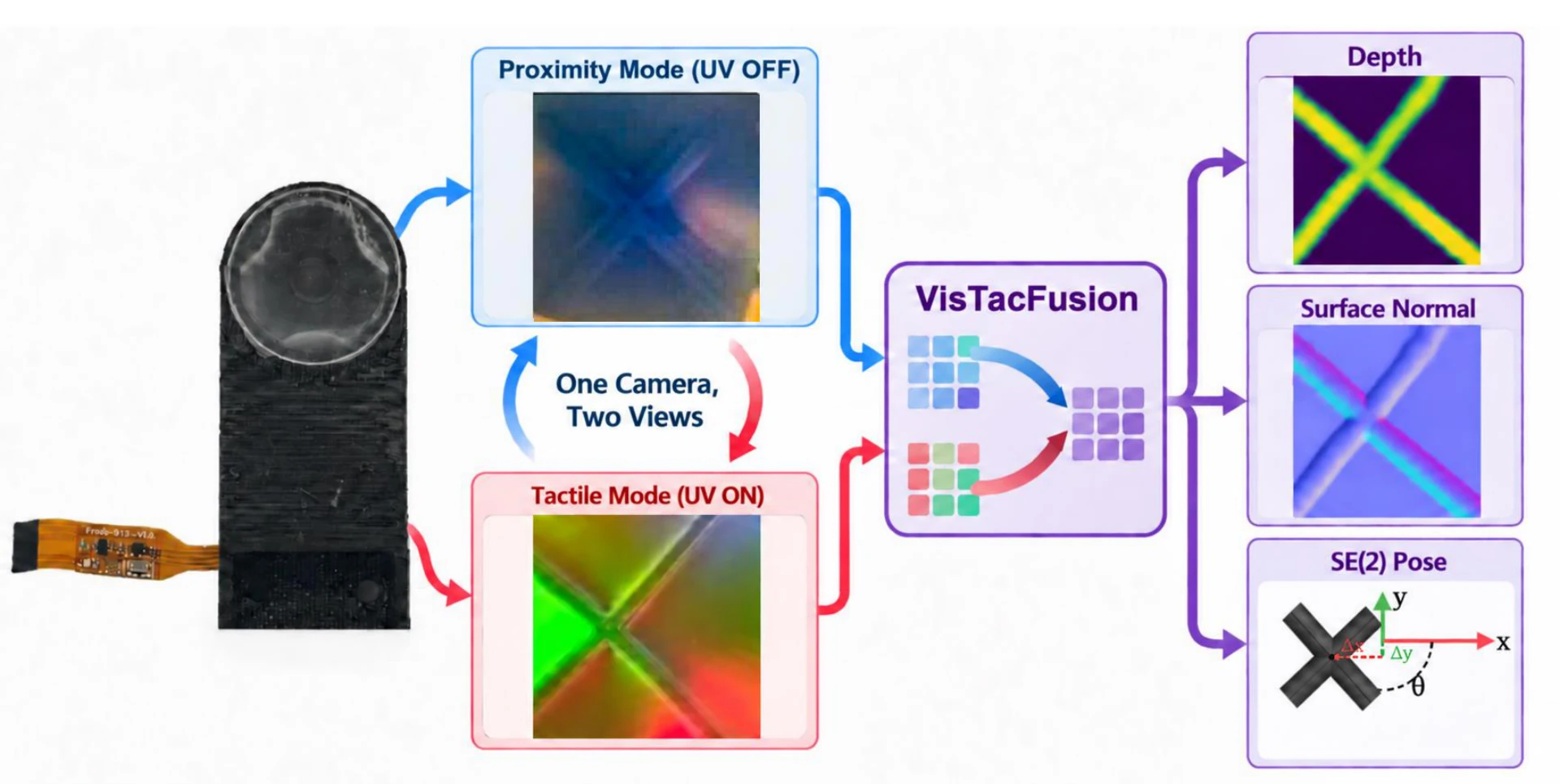
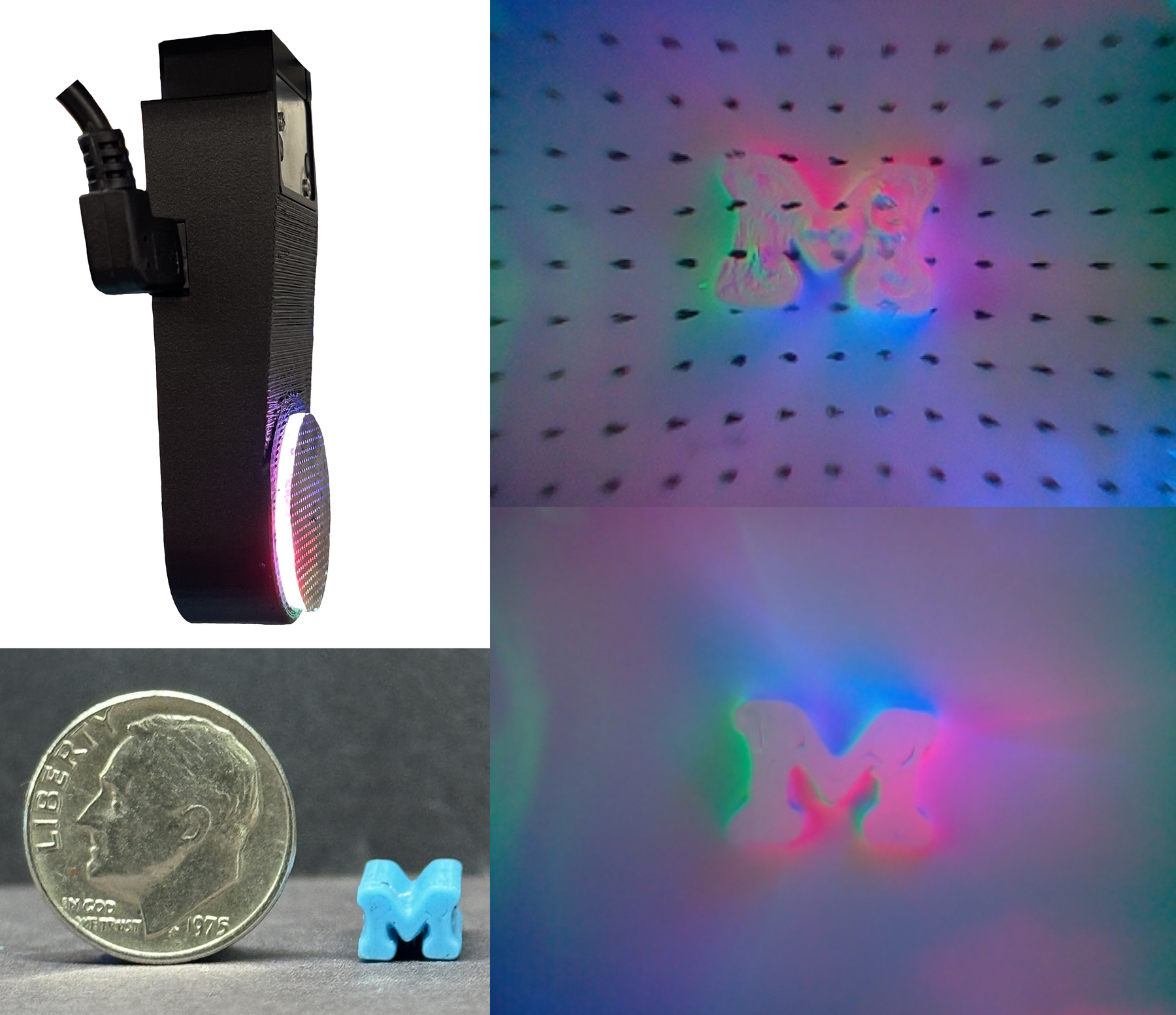
GelSlim 5.0: Unifying Vision and Touch with a Single Fingertip Camera
A fingertip tactile sensor whose single camera either looks through its gel skin or reads contact, depending on the lighting, plus a model that fuses both views to estimate object pose and contact shape.
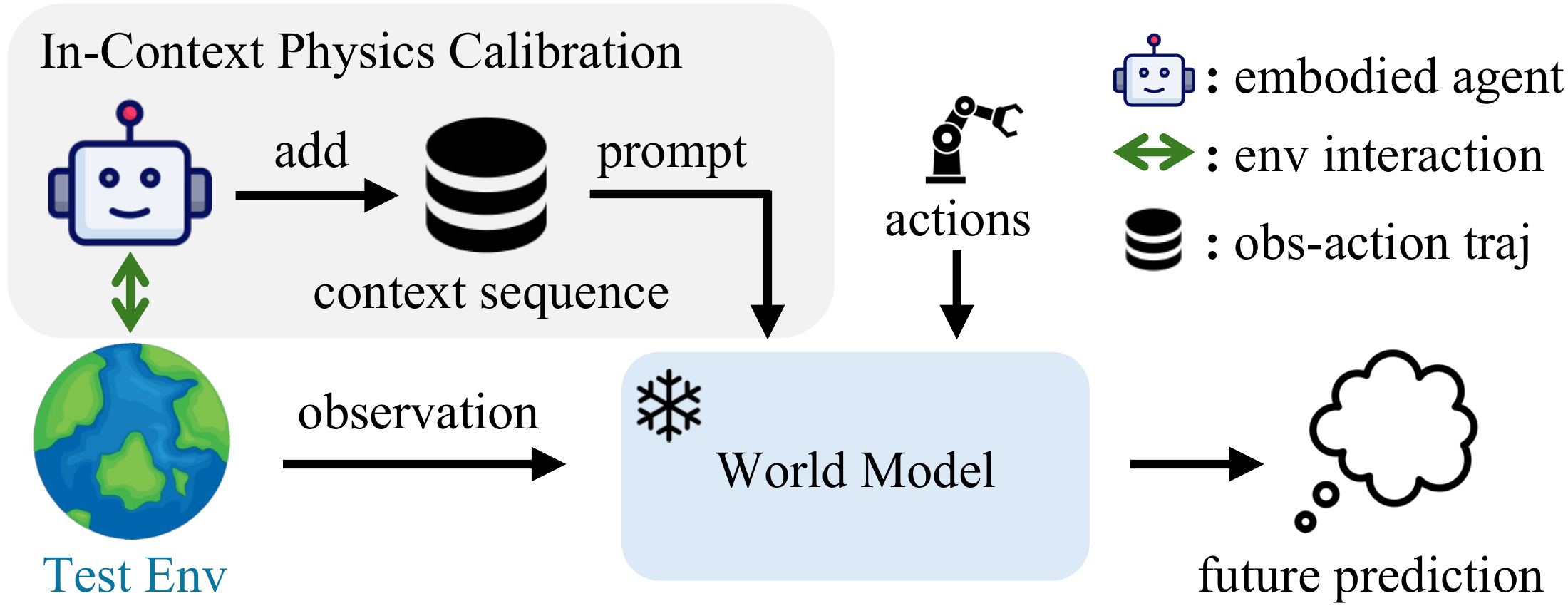
PhysiCalWorld: In-Context Physics Calibration for World Models
Lets a world model adapt to the physics of an unfamiliar scene, such as friction or mass, by watching a brief exploratory interaction and condensing it into a token that steers its predictions, with no fine-tuning.
Whole-Body Dexterity
Teaches a humanoid to hold and move bulky objects with its arms and torso, not just its hands, using a policy learned in simulation that transfers directly to a real Unitree G1.
Tactile-Guided Robot Learning: From Representation...
Tactile-Guided Robot Learning: From Representation Learning to Foundation Models
A review of how touch is used in robot learning, from learned tactile representations and touch-aware policies to tactile foundation and world models, with open problems in transferring across sensors and robots.
HULK: Learning Whole-Body Forceful Loco-Manipulation for Humanoids
A whole-body controller that lets a humanoid walk, carry, and push while bearing heavy loads, trained with reinforcement learning guided by a model of how the payload shifts the robot's balance.
ReDex: Repairing Sim-to-Real Dexterous Policies by Finger-Level Compliant Interaction
Fixes simulation-trained dexterous hand policies that stumble on real hardware: a person physically guides only the struggling fingers, and those corrected runs, with fingertip force readings, train a stronger force-aware policy.
ADEPT: Accelerating Dexterity via Pre-Training and Post-Training using Reinforcement Learning
A reinforcement-learning recipe that pre-trains a dexterous arm-hand policy on general object reorientation in simulation, then fine-tunes it for skills like peg insertion, and transfers to two real robot hands without real-world training.
Tactile Sim2Real without Tactile Simulation via...
Tactile Sim2Real without Tactile Simulation via Bottlenecked Latent Reconstruction
Moves touch-based policies from simulation to real tactile sensors without simulating those sensors, by training on contact signals the simulator already provides and then mapping real sensor readings into that learned space.
Scalable Open-Source Visuotactile Sensor for 6-Axis...
Scalable Open-Source Visuotactile Sensor for 6-Axis Contact Wrench Estimation in Tensegrity Robots
An open-source, camera-based tactile endcap for tensegrity robots that estimates full six-axis contact forces and torques from gel deformation and detects ground contact, built with a glue-free fabrication method so many units are cheap to make.
TAP-VLA: Tactile Annotation Prompting for Vision Language Action Models
Gives vision-language-action policies a sense of touch by drawing tactile shear readings as arrows onto the camera images they already use, which improves contact-rich manipulation without changing the model or adding tactile pre-training.
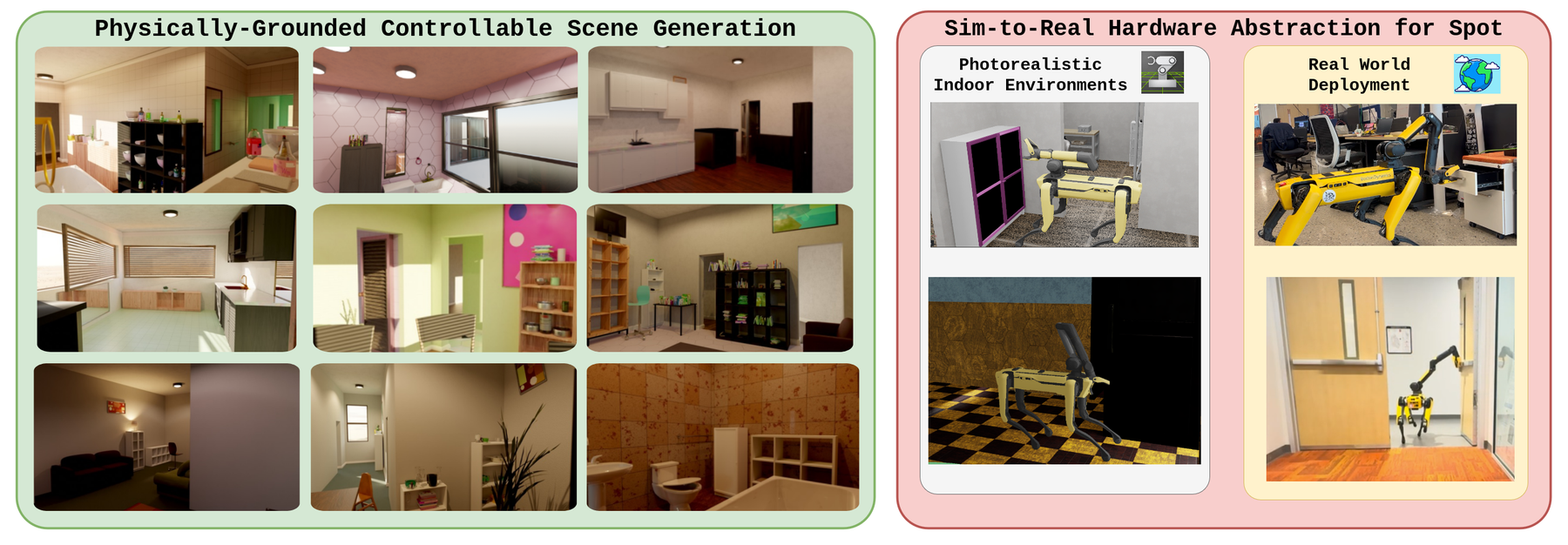
PhyGS: Physically-Grounded Controllable Scene Generation
A simulation framework in IsaacSim that procedurally builds photorealistic, building-scale indoor environments with articulated, physically simulated objects, plus a sim-to-real interface for running a Spot robot with an arm.
RoboMME: Benchmarking and Understanding Memory for Robotic Generalist Policies
A benchmark of 16 long-horizon manipulation tasks that test whether generalist robot policies can remember earlier events, used to compare different ways of adding memory to vision-language-action models.
TactAlign: Human-to-Robot Policy Transfer via Tactile Alignment
Transfers manipulation policies learned from human demonstrations with tactile gloves to a robot hand with different touch sensors, by learning a shared tactile representation without paired human and robot data.
HydroShear: Hydroelastic Shear Simulation for Tactile Sim-to-Real Reinforcement Learning
A tactile simulator that models how a gel sensor surface stretches and slips under contact, so reinforcement learning policies trained in simulation on shear signals carry over directly to real GelSight sensors for insertion, packing, and drawer tasks.
Sound of Touch: Active Acoustic Tactile Sensing via String Vibrations
Uses vibrating tensioned strings as a touch sensor. Contact microphones pick up how touching a string changes its sound, which lets a robot work out where and how hard it is being pressed and notice slipping.
ViSA-Flow: Accelerating Robot Skill Learning via Large-Scale Video Semantic Action Flow
Learns a representation of how manipulators move objects from large collections of unlabeled human videos, then fine-tunes it on a handful of robot demonstrations so new skills need much less robot data.
Simultaneous Extrinsic Contact and In-Hand Pose Estimation via Distributed Tactile Sensing
Estimates where a grasped object sits in the hand and where it touches the world at the same time, by combining tactile readings with physics constraints in a factor graph. This helps when the camera view is blocked or noisy.
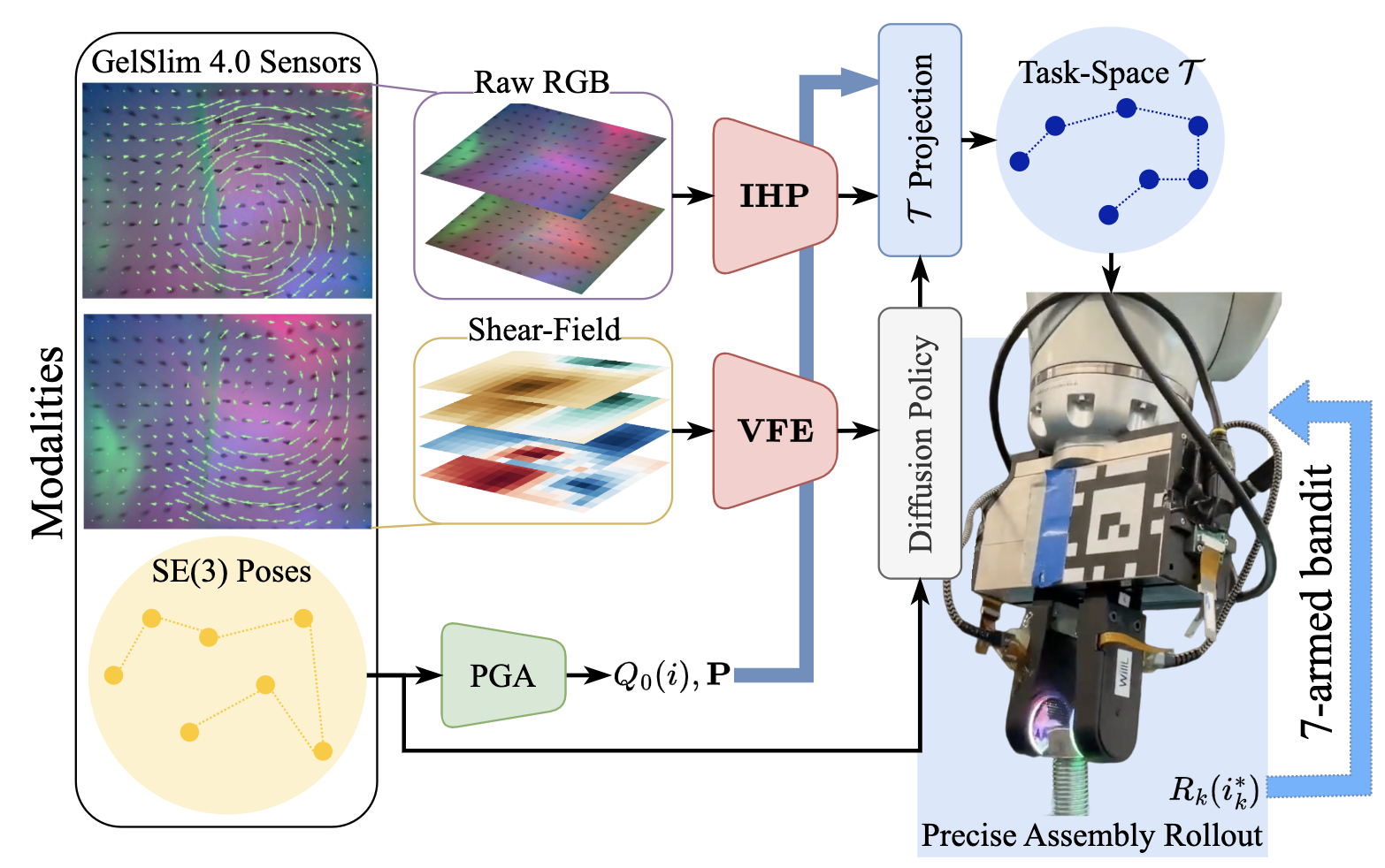
GrOMP: Grasped Object Manifold Projection for Multimodal Imitation Learning of Manipulation
Makes imitation-learned assembly policies more precise. It keeps a loosely held part on a small set of feasible poses and uses touch to correct small in-hand shifts before inserting pegs, threading nuts, or plugging in USB connectors.
Learning Diffusion Policies for Robotic Manipulation of...
Learning Diffusion Policies for Robotic Manipulation of Timber Joinery under Fabrication Uncertainty
Trains industrial robot arms to assemble timber mortise-and-tenon joints using diffusion policies guided by force-torque feedback. The policies keep working when the joint is moved up to a centimeter from where the robot expects it.
Using Temperature Sampling to Effectively Train Robot Learning Policies on Imbalanced Datasets
Shows that changing how often each task is drawn during training, and sampling rare tasks more as training goes on, helps robot policies learn from datasets dominated by a few common tasks, in simulation and on a real Franka arm.
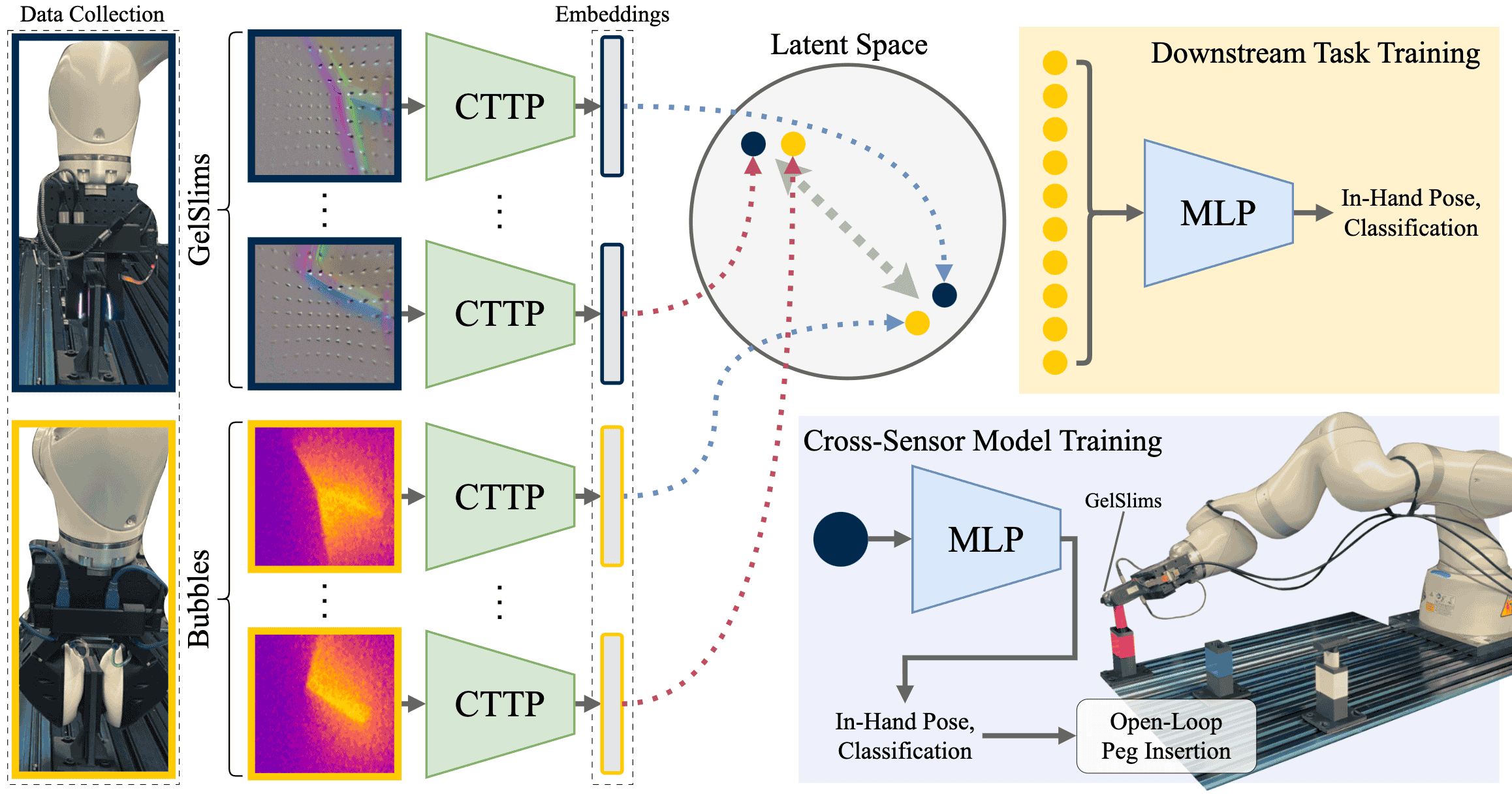
Cross-Sensor Touch Generation
Generates what one visuo-tactile sensor would feel from another sensor's readings, either with paired data or via an intermediate depth map, so tactile models trained on one sensor can be reused on a different one.
Hydrosoft: Non-Holonomic Hydroelastic Models for Compliant Tactile Manipulation
Hydrosoft is a computationally efficient, path-dependent, and differentiable model for simulating and controlling soft, compliant robotic components in dexterous manipulation tasks.
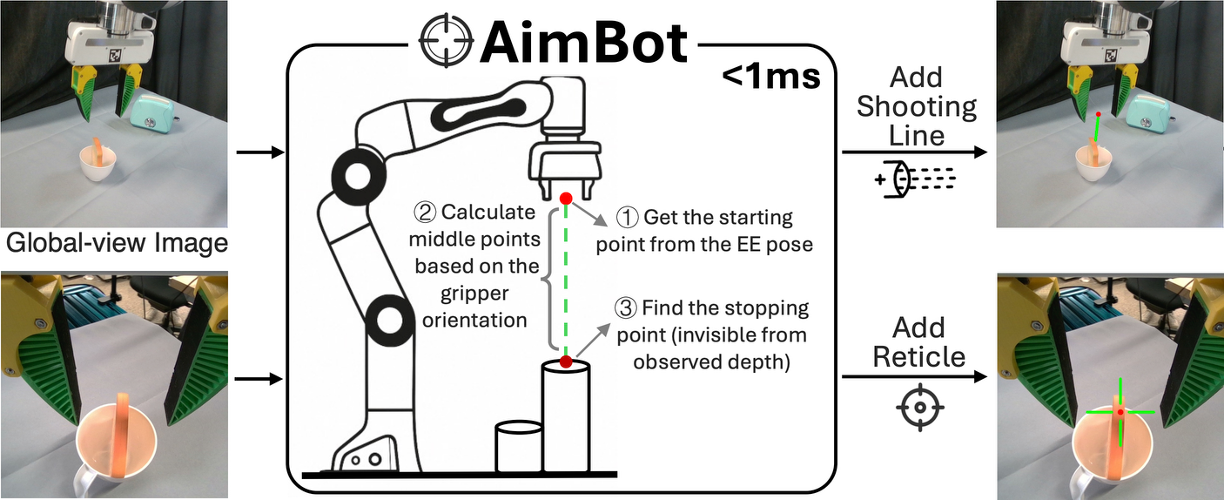
AimBot: A Simple Auxiliary Visual Cue to Enhance Spatial Awareness of Visuomotor Policies
AimBot is a lightweight visual augmentation technique that provides explicit spatial cues (e.g., shooting lines and scope reticles) to improve any Vision-Language-Action (VLA) models.
ViTaSCOPE: Visuo-tactile Implicit Representation for In-hand Pose and Extrinsic Contact Estimation
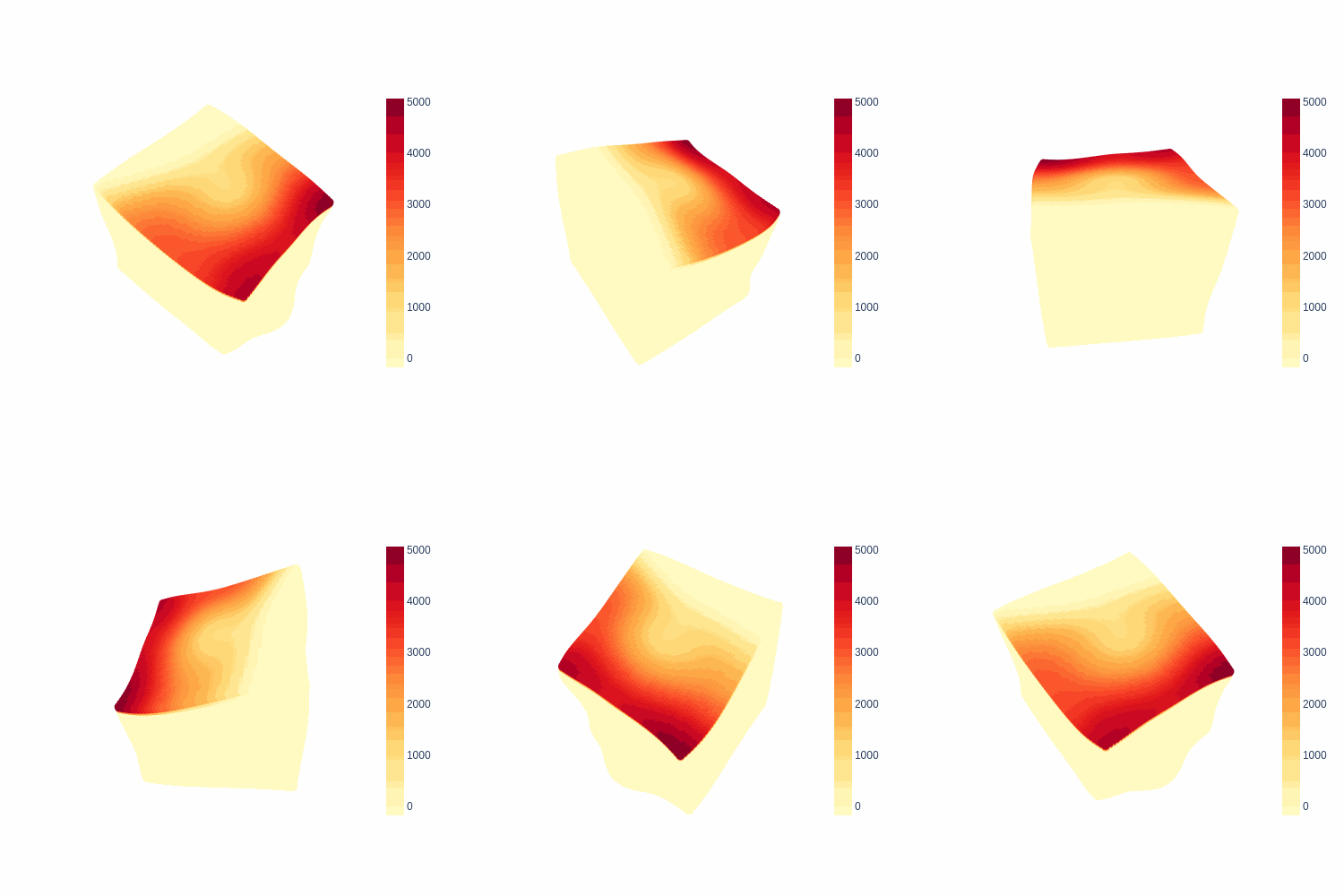
ViTaSCOPE is a neural implicit representation that is trained entirely in simulation to integrate vision and touch for in-hand object pose and extrinsic contact estimation.
Vib2Move: In-Hand Object Reconfiguration via Fingertip Micro-Vibrations
A novel approach to reposition object in free-space using a parallel jaw gripper, by utilizing the micro vibration at finger tips. We derive a sliding motion model for objects clamped in a parallel gripper with two symmetric, variable-friction contact patches, and propose a motion planner that coordinates end-effector finger trajectories and fingertip vibrations to achieve the desired object pose.
RUMI: Rummaging Using Mutual Information
A robot picks exploratory motions that are most informative about where a hidden, movable object sits and how it is oriented, updating its belief from contact and vision until the object's pose is pinned down.
Estimating Deformable-Rigid Contact Interactions for a Deformable Tool via Learning and Model-Based Optimization
Combines a learned model of a soft tool with a contact optimization step to estimate how a rigid object moves and which forces act on it when a compliant tool pushes or pivots it.
Modeling of the High-Viscosity Fluid Transient Flow for...
Modeling of the High-Viscosity Fluid Transient Flow for Material Deposition in Direct Ink Writing
A time-dependent flow model of a 3D-printing dispensing system for thick pastes, covering pump, mixer and nozzle, that predicts how extruded flow lags behind commands and how much material bulges at sharp corners.
RACER: Rich Language-Guided Failure Recovery Policies for Imitation Learning
Pairs a vision-language supervisor that describes mistakes and how to fix them with a language-conditioned manipulation policy, trained on demonstrations augmented with failure-and-recovery examples.
This&That: Language-Gesture Controlled Video Generation for Robot Planning
Uses a video generation model, guided by a short instruction plus pointing gestures, to imagine how a task should unfold, and then turns that generated video into robot actions.
Neural Inverse Source Problems
Physics-informed neural networks that recover the unknown external source acting on a system, together with its full state, from partial and noisy observations.
Touch2Touch: Cross-Modal Tactile Generation for Object Manipulation
A diffusion model that translates touch signals between sensors, so a manipulation method built for Soft Bubble sensors can run on a robot fitted with GelSlims.
GelSlim 4.0: Focusing on Touch and Reproducibility
An open-source, easier-to-build vision-based tactile finger with a perception library for depth and shear estimation, aimed at making tactile research reproducible.
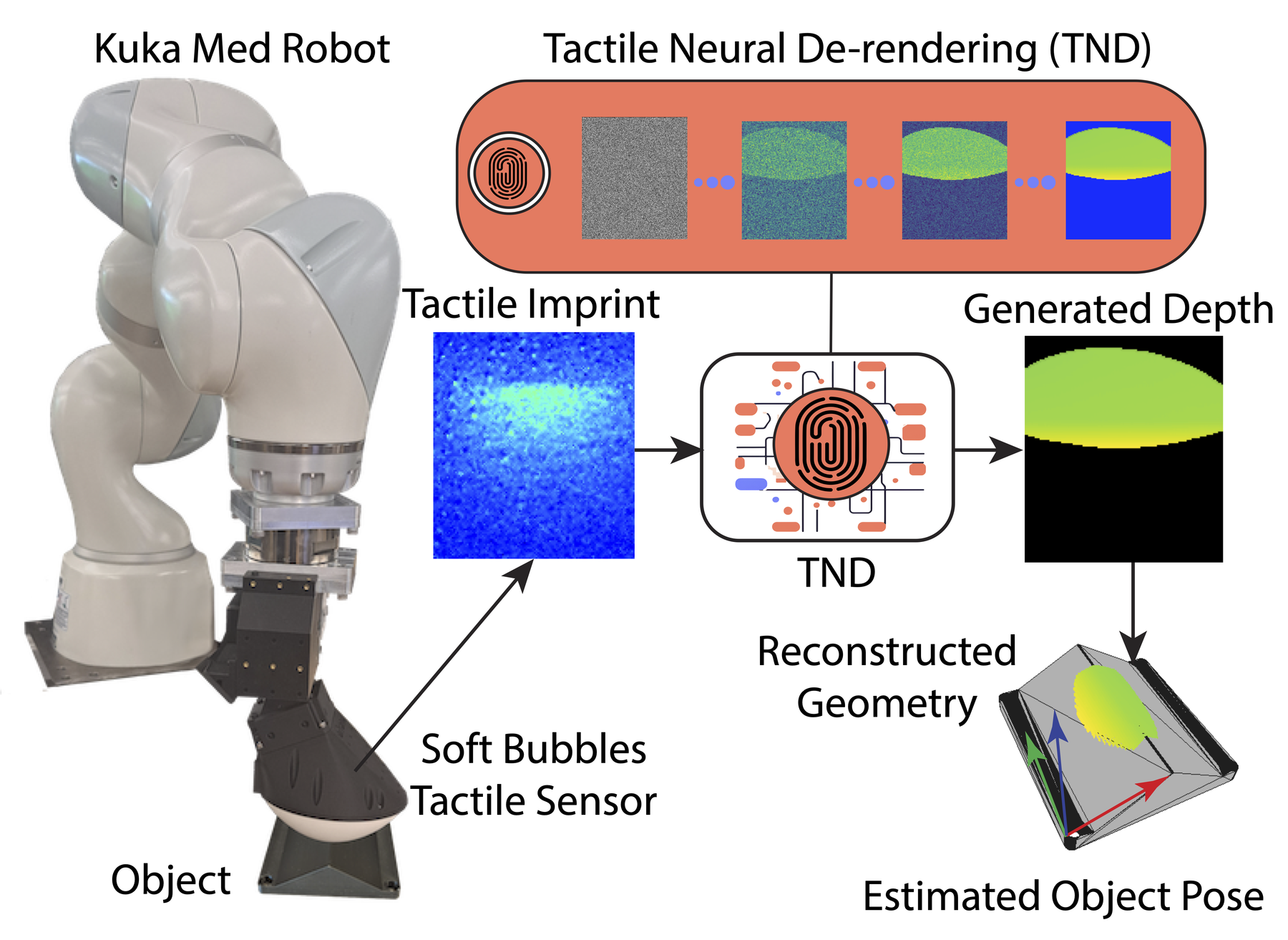
Tactile Neural De-rendering
A novel approach that leverages a generative model to reconstruct a local 3D representation of an object based solely on its tactile signature. This 3D reconstruction not only facilitates precise pose estimation but also allows for the quantification of uncertainty, providing a robust framework for tactile-based perception in robotics.
Built Different: Tactile Perception to Overcome Cross-Embodiment Capability Differences in Collaborative Manipulation
Using representations of tactile feedback to transfer force-rich compliant policies from high-end robots to those without force feedback. This work involves diffusion-based behavior cloning and vision-based tactile sensors.
Contrastive Touch-to-Touch Pretraining
Contrastive pretraining on paired touches from two different tactile sensors, producing a shared representation that lets touch models move from one sensor to the other without retraining.
Tactile Functasets: Neural Implicit Representations of Tactile Datasets
Training neural implicit functions to reconstruct the high-dimensional raw tactile dataset. It produces compact representations that capture the underlying structure of the tactile sensory inputs. We demonstrate the efficacy of this representation on the downstream task of in-hand object pose estimation, achieving improved performance over image-based methods while simplifying downstream models.
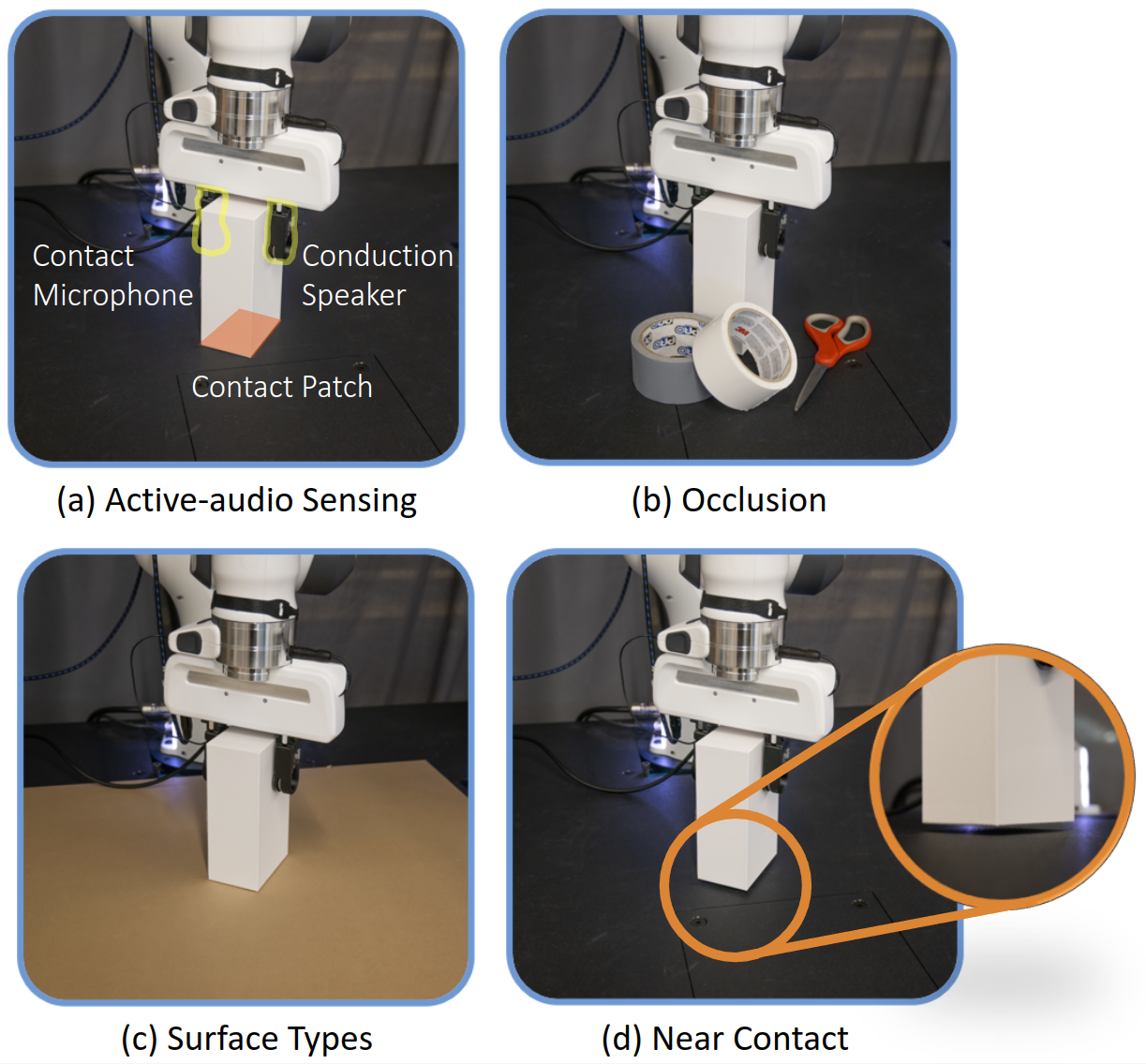
Visual-auditory Extrinsic Contact Estimation
Estimating contact locations during manipulation using a multimodal visual-auditory approach. We use contact microphones, speakers, and a static camera to detect interactions between grasped objects and their environment. Our method uniquely transfers auditory feedback into a simulated environment, enabling accurate zero-shot contact estimation in real-world scenes without additional training, as shown in different environments.
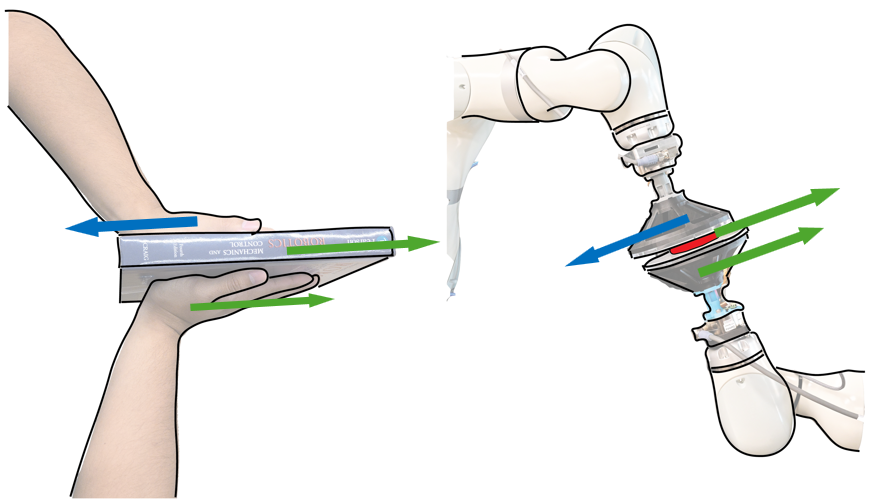
Bimanual In-hand Manipulation using Dual Limit Surfaces
Using extended dual limit surfaces for bimanual in-hand manipulation. Our approach leverages two cooperative patch contacts on either side of the object to iteratively reposition it within the robot’s grasp by alternating between sliding and sticking motions. We demonstrate the effectiveness of our approach in simulation and real-world experiments, showing significant improvements in object stability and pose accuracy across various object geometries.
Tactile-Driven Non-Prehensile Object Manipulation via Extrinsic Contact Mode Control
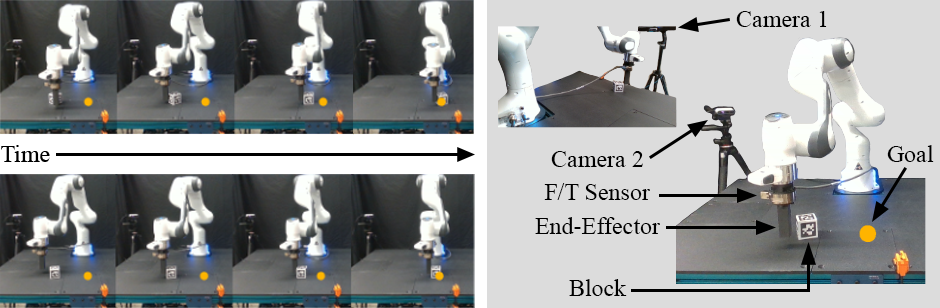
Contact-rich non-prehensile manipulation using grasped objects. Our approach solves for robot actions that drive object poses and forces to desired values while obeying the complex dynamics induced by the sensors as well as the constraints imposed by static equilibrium, object kinematics, and frictional contact.
CALAMARI 🦑: Contact-Aware and Language conditioned spatial Action MApping for contact-RIch manipulation
Language-conditioned and contact-rich tool manipulation policy. We show a generalizable and transferable manipulation framework for controlling and planning interactions between tool and the environment.
TactileVAD: Geometric Aliasing-Aware Dynamics for High-Resolution Tactile Control
Touch-based control for objects with geometric aliasing. Our method introduces a novel tactile benchmarking task: the tactile cartpole.
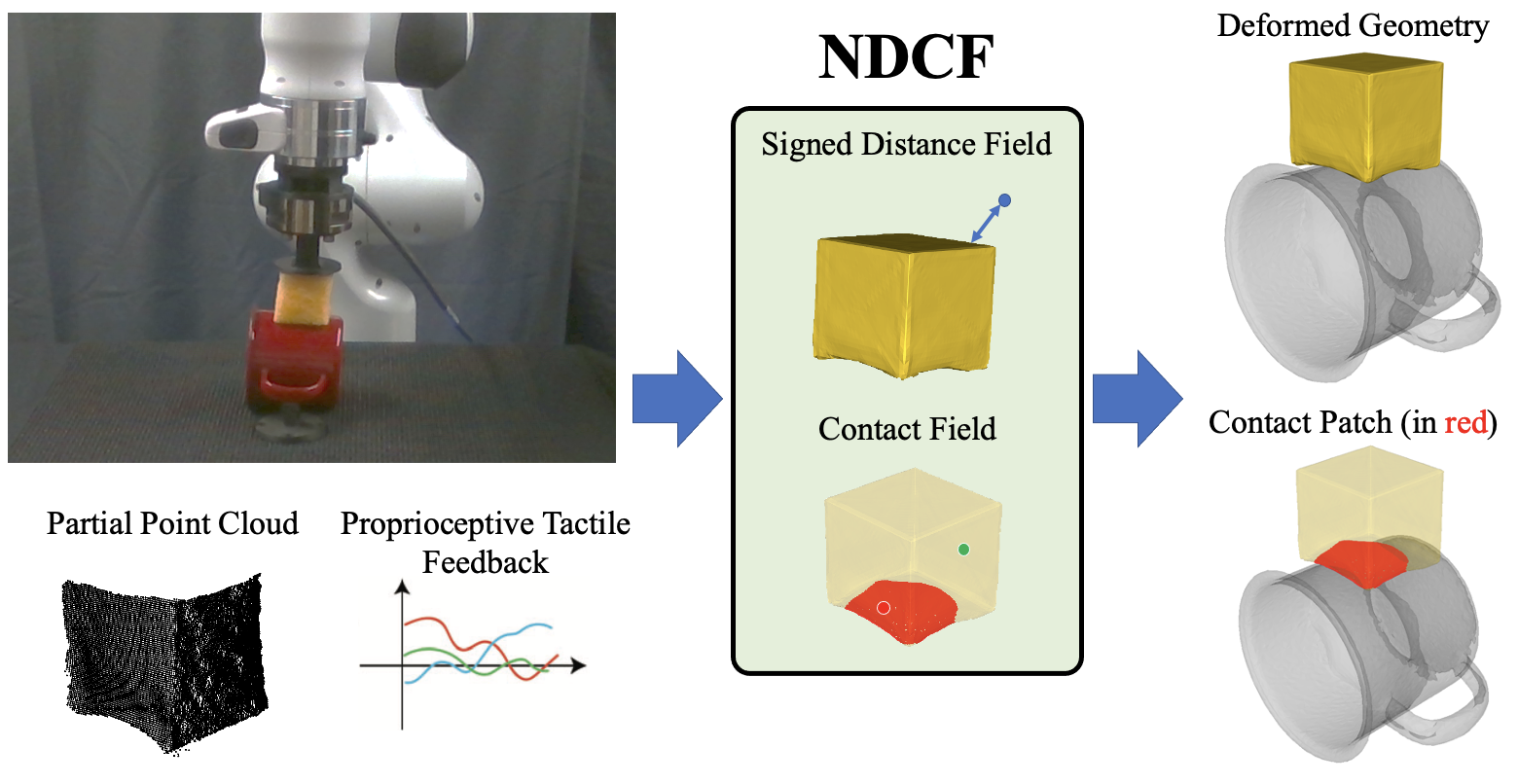
Integrated Object Deformation and Contact Patch Estimation from Visuo-Tactile Feedback
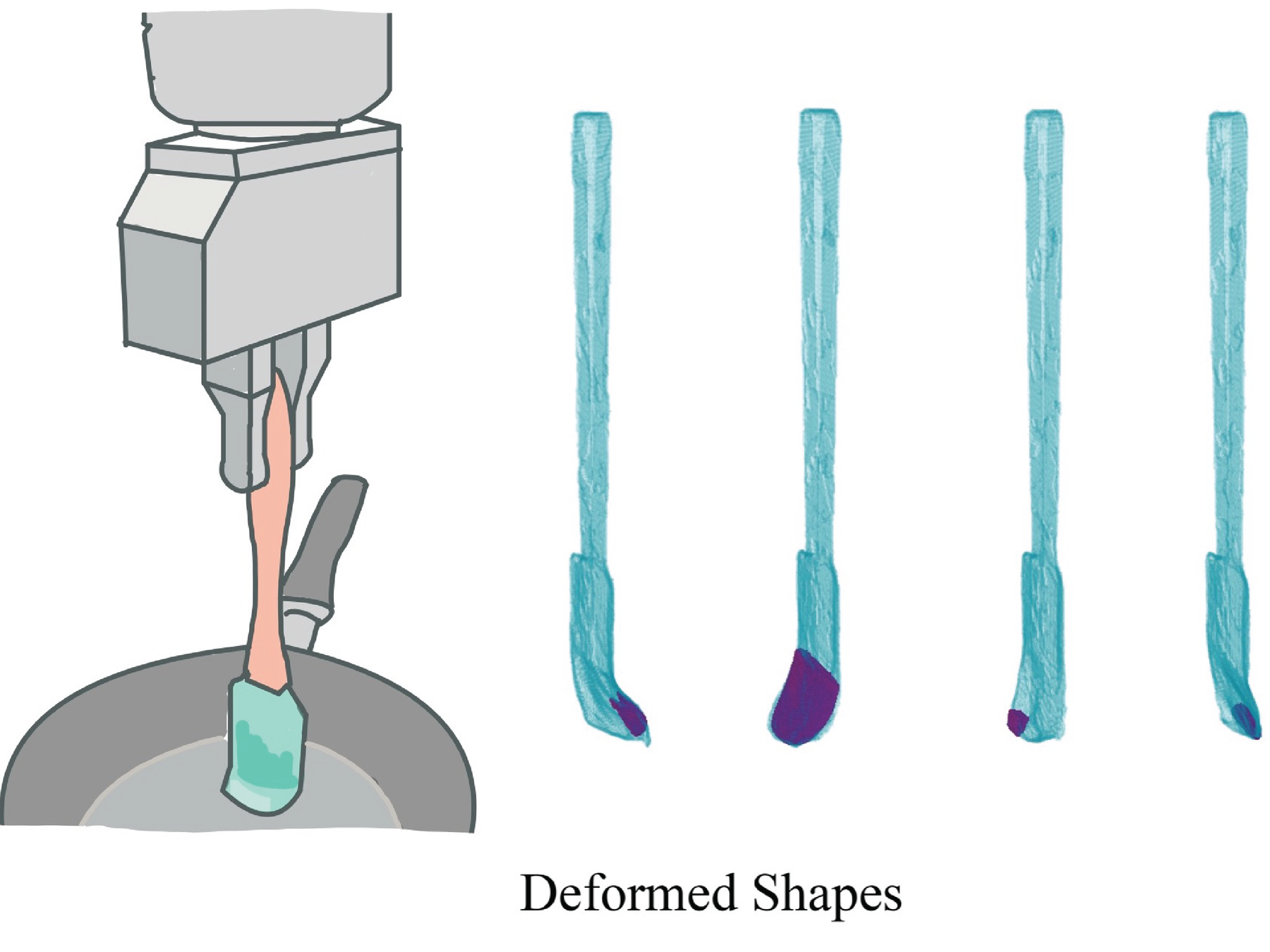
Jointly estimating how a tool deforms and contacts various shapes, both in simulation and on a physical robot system. Our proposed representation uses implicit neural fields to represent both the deforming tool geometry and contact interface between tool and environment.
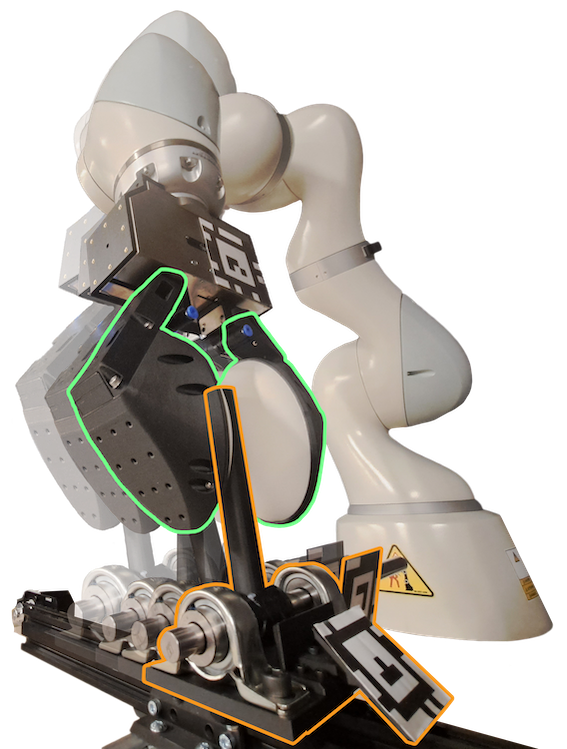
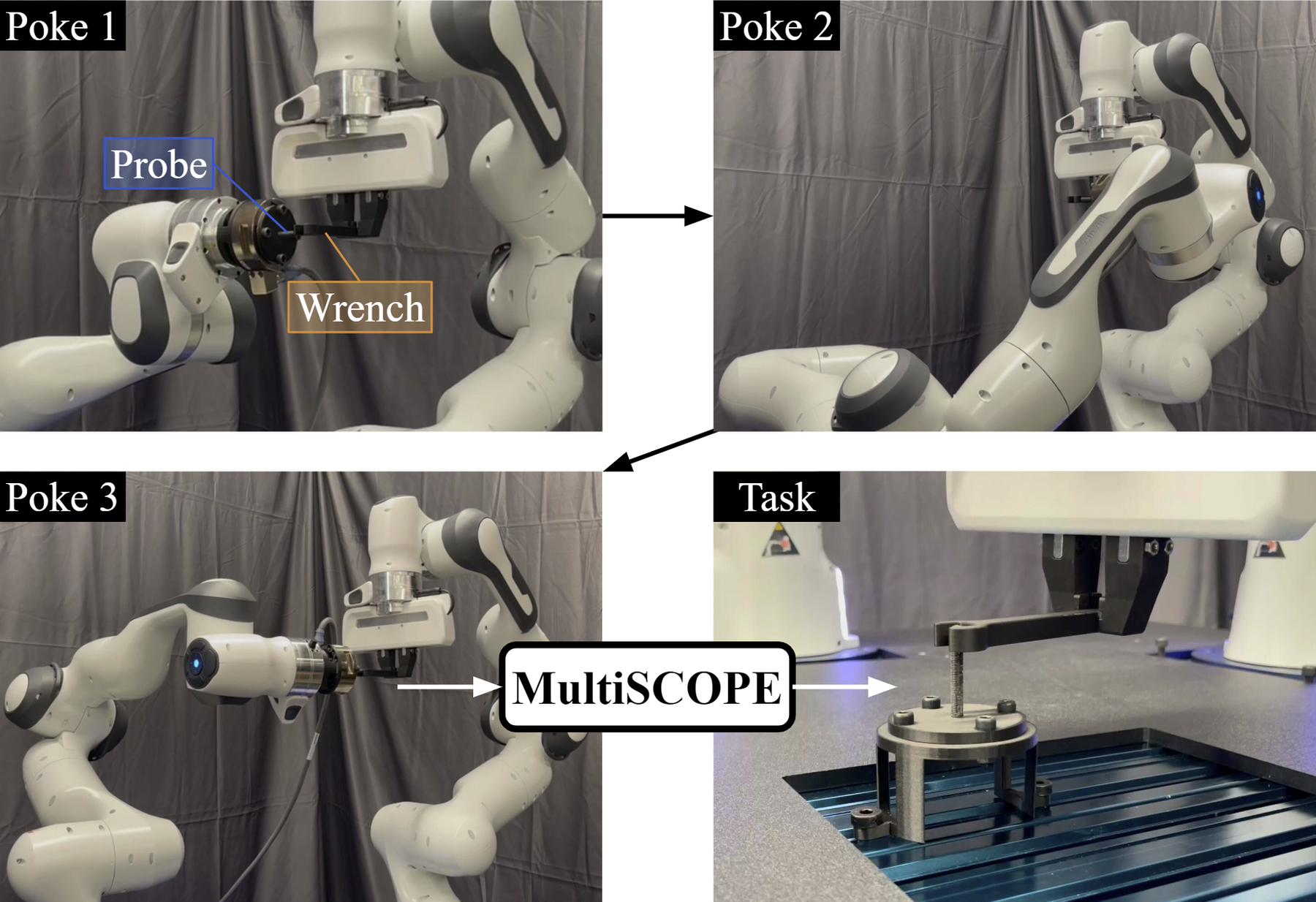
MultiSCOPE: Disambiguating In-Hand Object Poses with Proprioception and Tactile Feedback
In-hand object pose estimation with a bimanual robot system. The robots use multiple contact actions along with proprioception and tactile feedback to estimate the pose of each tool.
Precise Object Sliding with Top Contact via Asymmetric Dual Limit Surfaces
Mechanics and planning algorithms to slide an object on a horizontal planar surface via frictional patch contact made with its top surface.
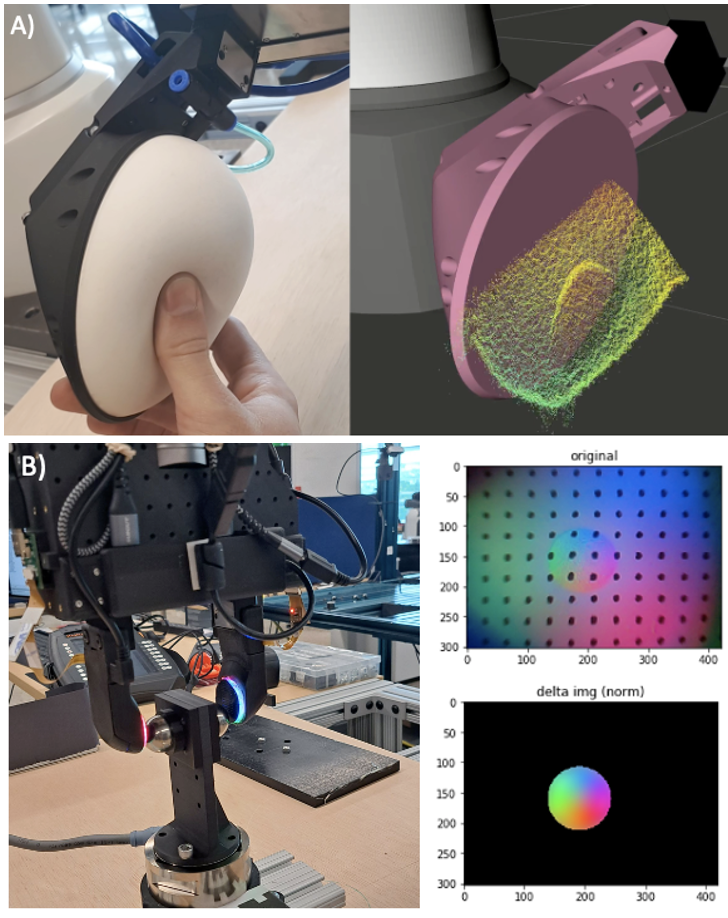
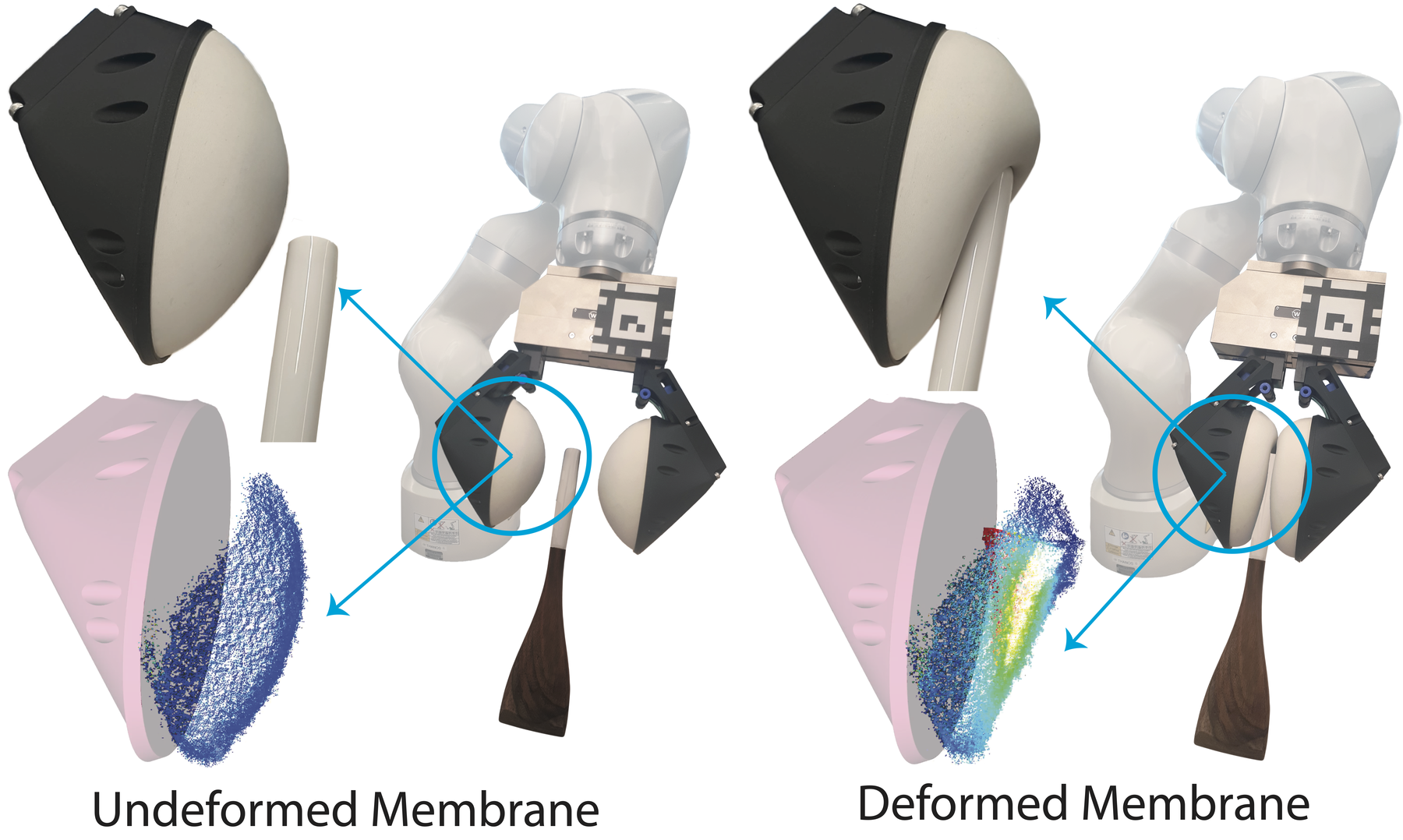
Manipulation via Membranes: High-Resolution and Highly Deformable Tactile Sensing and Control
Object manipulation and tool use with deformable high-resolution membrane sensors. The robot learns the dynamics of the deformable membrane use them to control the pose of grasped objects and transmitted forces to the environment.
VIRDO++: Real-World, Visuo-Tactile Dynamics and Perception of Deformable Objects
Our novel approach for, and real-world demonstration of, multimodal visuotactile state-estimation and dynamics prediction for deformable objects.
Learning the Dynamics of Compliant Tool-Environment Interaction for Visuo-Tactile Contact Servoing
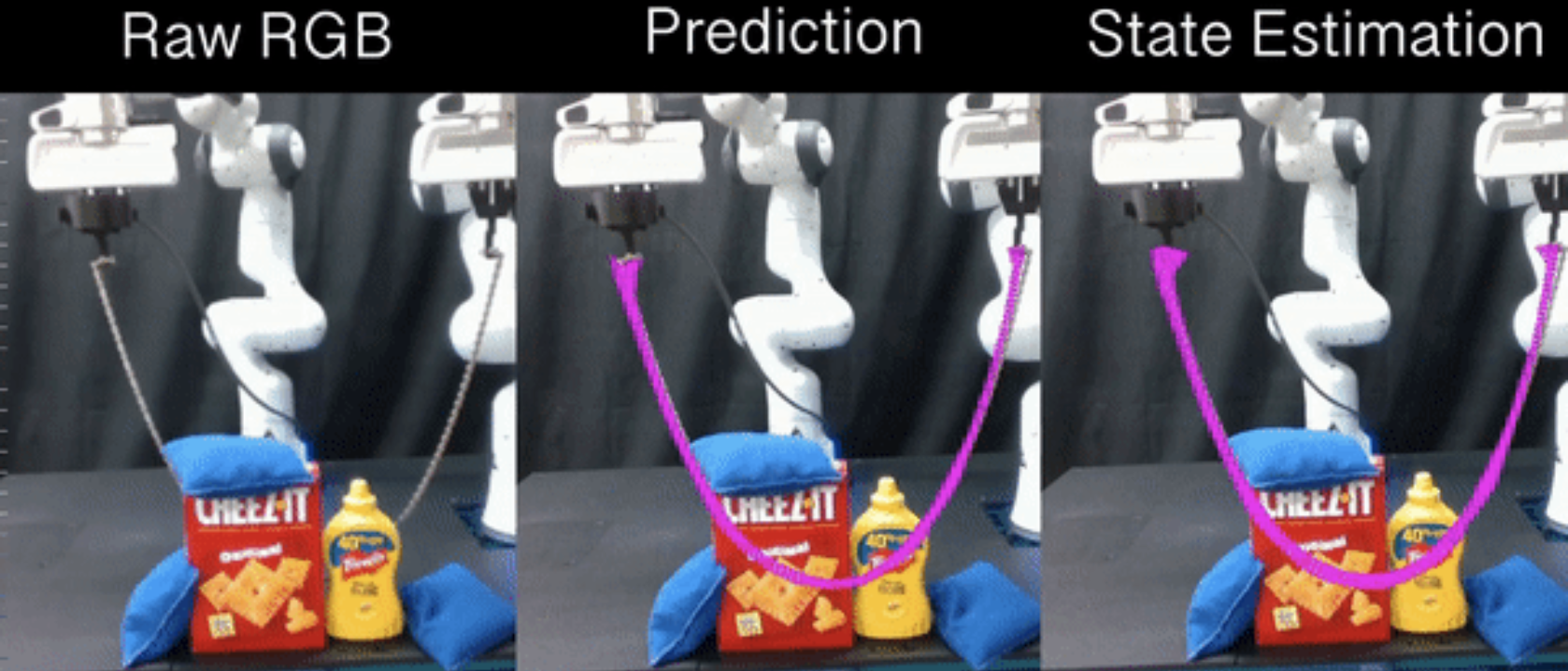
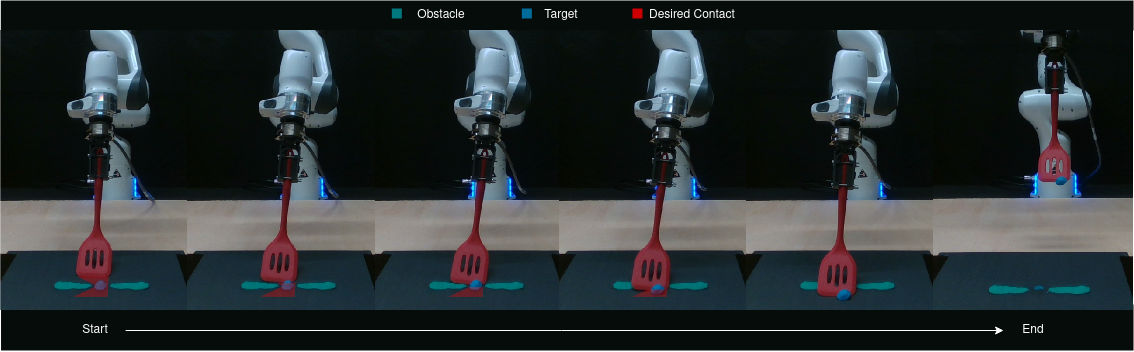
Representing and controlling extrinsic contact between a compliant tool and the environment, including in the presence of obstacles.
Visuo-Tactile Transformers for Manipulation
Doing multi-modal reinforcement learning in simulated and real world environments with transformer networks.
Simultaneous Contact Location and Object Pose Estimation
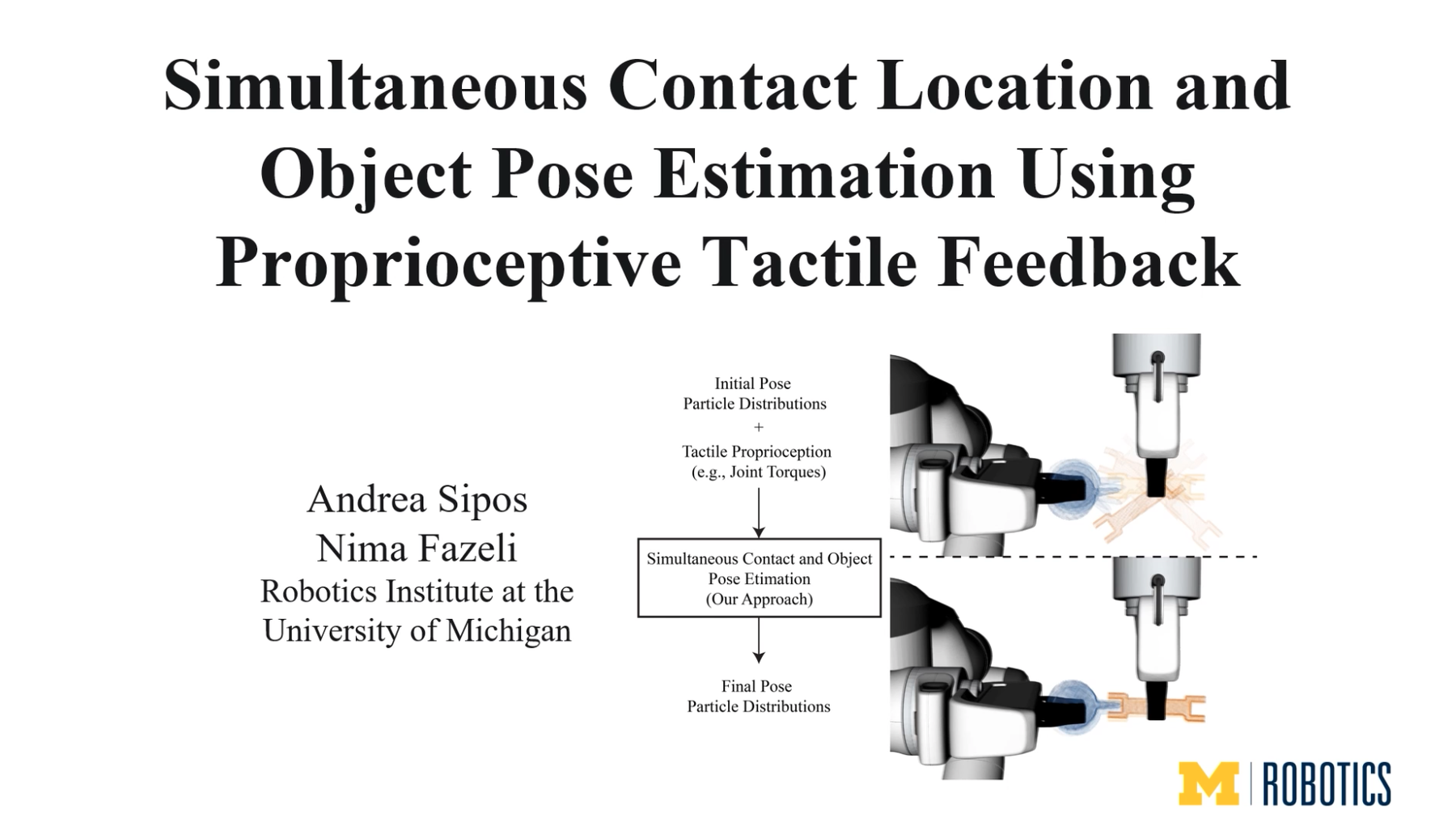
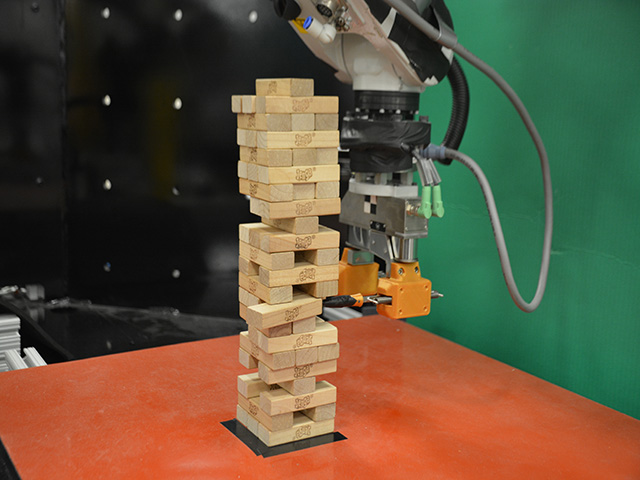
In-hand object pose estimation. The robot uses only proprioceptive tactile feedback to estimate the pose of grasped objects by leveraging the contacts it makes between them.
Visio-Tactile Implicit Representations of Deformable Objects
Learning multimodal neural implicit representations capable of representing deformable objects!
Hierarchical Learning for Manipulation
Learning hierarchical multimodal representation learning for complex manipulation tasks.
Blind Object Retrieval In Clutter
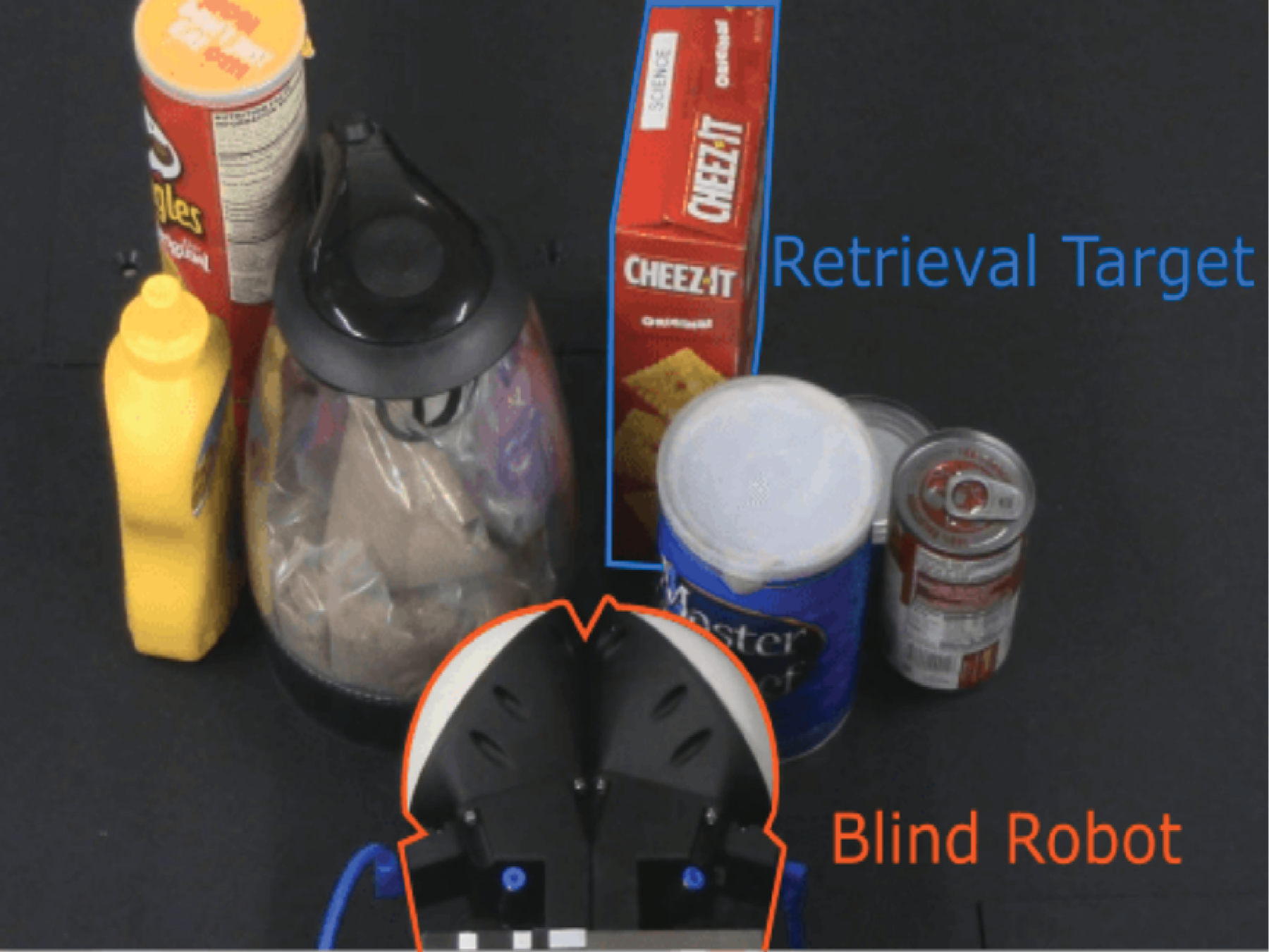
Using tactile feedback to localize objects blindly in clutter. Our robot rummages, clusters objects it touches, and picks the desired object.
Trap Aware Model-Predictive Control
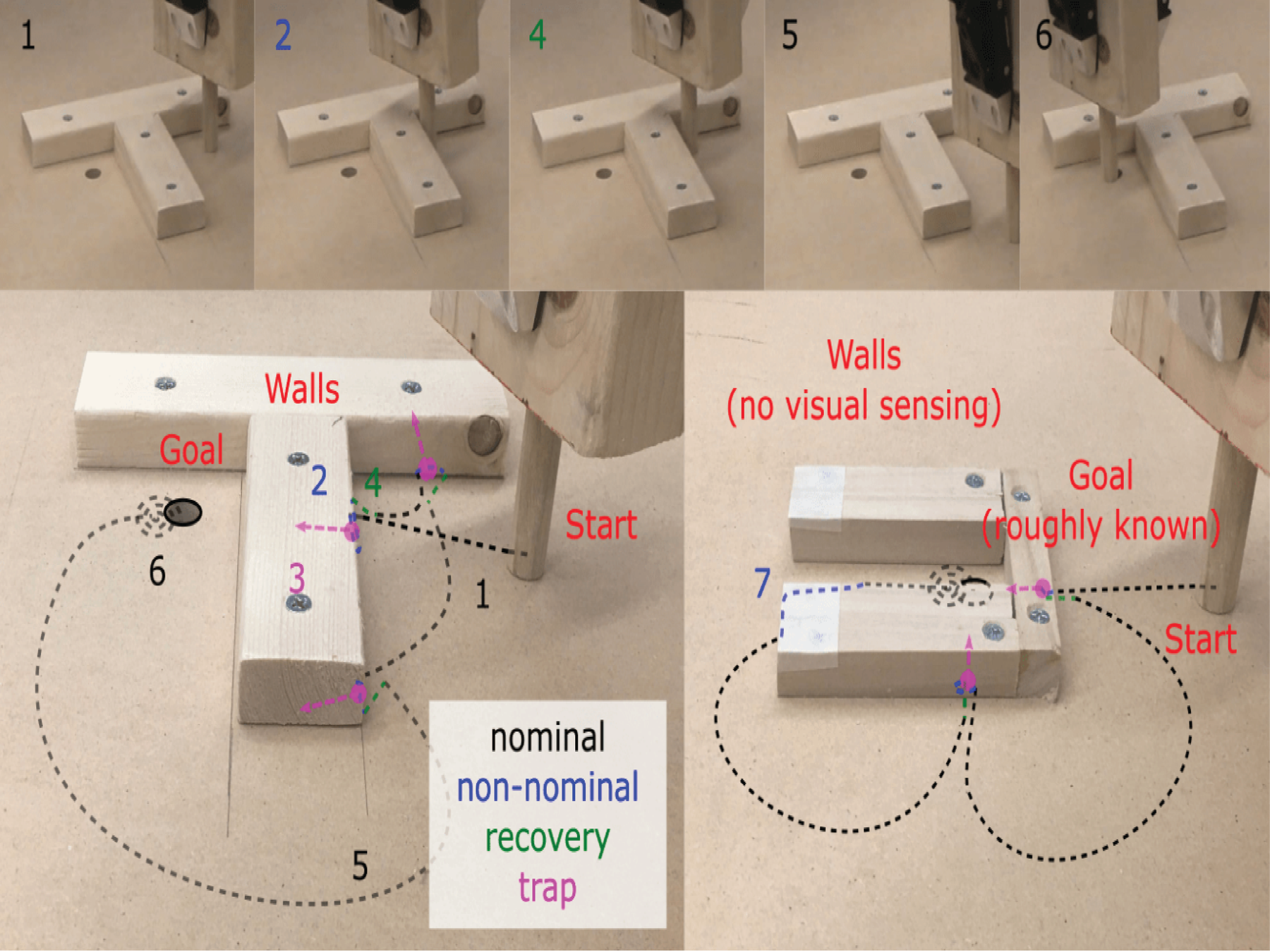
Using tactile feedback to blindly navigate novel environments and build trap-aware representations that help the robot achieve its goals.
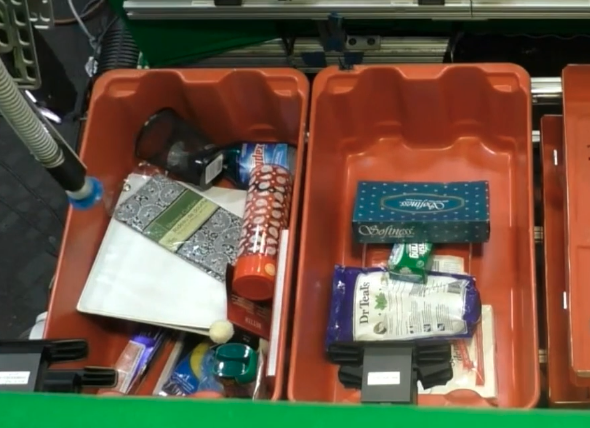
Manipulation for Industrial Automation and Warehouse Logistics
Developing systems that are capable of autonomous picking and stowing as part of our entry to the Amazon Robotics Challenges.
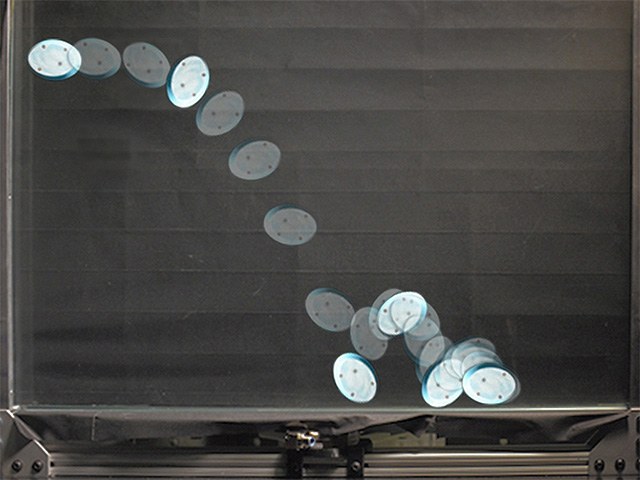
Data-Augmented Models for Manipulation
Developing models that bring together the best of physics-based and data-driven methods.
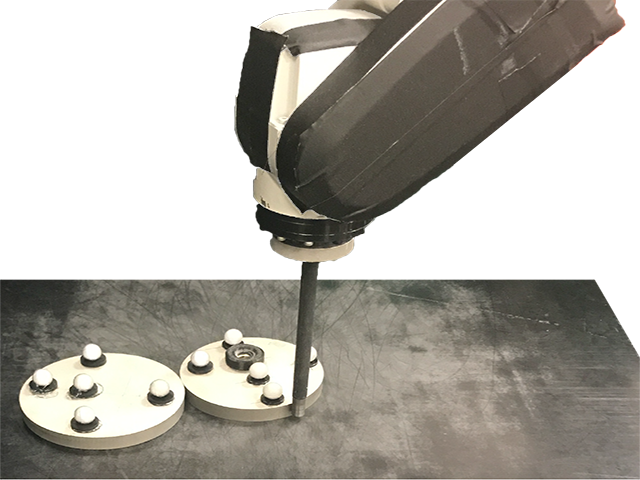
Contact Modeling, Validation, and Inference
Identification and evaluation of commonly used contact models for robotics applications.
High-Resolution and High-Deformation Tactile Reasoning
Developing models and controllers that enable object manipulation with high-resolution and highly deformable tactile sensors.